


Tuesday, August 19, 2008
Visit Costa Rica
There is no other Central American country that is more popular than Costa Rica. Joining any Costa Rica Forum will convince you that the said country is worthy to visit. If you are a US citizen, you are lucky because this tourist Mecca is just a few hours away by plane from the US mainland. Forums about the country are good avenues to interact with people who actually visited the place. They can give you useful tips, thereby making you more prepared. Reading forum comments is interactive. Comments are not purely propaganda. First-hand impressions about Costa Rica can be reliably gathered from forums. You will not regret your stay in Costa Rica if you are well-informed. Aside from your maps, tourist guide book, and forum interactions, reading Costa Rica Blogs is also helpful. This is true especially true if these blogs are written by tourists who actually visited the place. Costa Rica offers marvelous ecological tourists attractions.

Human Society and Consumerism
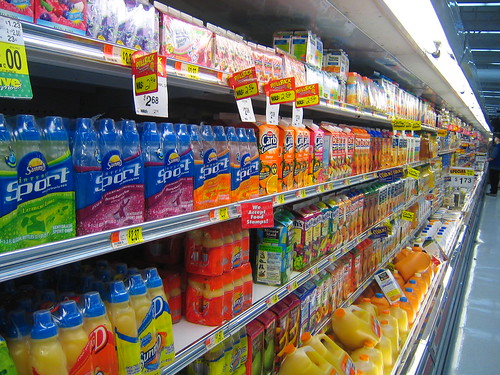 Human society is a very complex society. It is far more complex and intricate than anything that can be found in nature. It is more complicated than a beehive, an ant colony, coral reef, or a termite community. Unlike other animal societies, human society retains the individuality of its members. It is also a highly flexible society. Although it has highly specialized sectors, its members can easily change roles. Its individual members can even have multiple roles at the same time. Unlike other animal societies, human society is very dynamic. It evolves faster than its individual members. It has evolved to cater not only to mere survival of its members but also to artistic and scientific pursuits. It has become sophisticated enough to appreciate the beauty and grandeur of nature. It is capable of understanding the very fabric of the universe itself. It is capable of reflecting unto itself. It is the only society that has the concept of future. It is capable of learning and passing down its knowledge from one generation to the next.
On the other hand, sophisticated as it is, human society is far from being perfect. It is still striving to achieve utopian ideals. Despite of its wealth, many of its members are still not benefiting from its progress. Its distribution of resources is inefficient. It is ironic that in the midst of plenty, many are still hungry and are barely able to survive. Scarcity is not the problem but the way wealth and resources are distributed. It is a society that is based on consumerism. Only those who have the capacity to buy are the ones that benefit most from the products and services that it produces. Good quality of life is accessible only to a minority. There are even sectors of this society that do not even have access to basic survival needs.

Consumerism as an economic system of the human society is an unjust and inefficient system. It is a system that is not anymore based on actual needs but rather on artificial wants. These are wants created by the mass media. People are not anymore eating merely to satisfy their hunger. They eat to satisfy their palate. People are not anymore wearing clothes as protection against the weather. They are wearing clothes to show-off. The more expensive a piece of clothing, the more desirable it becomes even if it is not anymore practical to wear. Some people are building houses not anymore to serve as shelters. They build houses to showcase their success or exhibit their wealth. It is really hard to understand why the broom closets of some mansions need to be more expensive than the shacks along river banks occupied by at least six-member families each.
Consumerism is not based on needs but based on greed. It fuels the individual desires to have more possessions even if these possessions are not anymore necessary and only become burdens. Ironically, consumerism produced communication technologies but it has made communication gaps become wider. To some extent, computers, cellular phones, and the internet paradoxically isolated individuals rather than making them more cohesive. Some people have lost the capacity to communicate in an individual or personal level. Gadgets seemed to have made some people numb about other people.
On the other hand, consumerism has impact not only on the social behaviors of people but also on the biosphere itself. Consumerism is taking too much from natural resources and converting these raw materials into unnecessary but coveted products. Hence, natural resources are depleted much faster than it is being replenished. Some resources are not even renewable. Consumerism is taking too much from nature without replenishing it. At the same time, it is also dumping waste in the process. Unlike other systems, such as a forest or a coral reef, the resources are not effectively used and recycled by the human society. Balance is therefore not preserved. Consumerism is the complete opposite of the natural order.
Take for instance the case of the automobile industry. It is an industry being sustained by the mining the earth of petroleum and metal. Petroleum products end up polluting the air as they are converted to greenhouse gases. On the other hand, the metal parts of the automobiles end up rusting in junkyards. Although some of these metals are recycled, large bulk of these materials are lost to oxidation. Just imagine how many tons of rocks and soil have to be removed just to produce the metals needed for car production. Just imagine how much river, lake, or ocean siltation it causes. On the other hand, some of the materials used in cars are not recyclable. Materials such as polymers and fiber glass end up in some landfills, waiting millennia to be decomposed.
 Consumerism resulted to the mass production of surplus products that eventually end up as garbage. Every time you shop, you contribute to the piling up of garbage. The irony of this is that most of these products benefit only very few people in spite of their abundance. Significant amount of these products are only wasted. To prove this concept, just visit the food court of a nearby mall. Observe how much food end up in the garbage bin.
Human society is a sophisticated society. However, it is not sophisticated enough to provide for all its members. It is not sophisticated enough to be capable of optimizing resources without too much non-recyclable waste. When it comes to this aspect, an ant colony can be considered to be a far more efficient and just society.
Saturday, August 16, 2008
Stored Sunlight
(NOTE: Republished from YPEC blogsite)
For about 100,000 years of existence of Homo sapien sapien as a species, it only reached its one billion population mark in the last 200 years. For many millennia, human population has stayed below one billion. Since the 1800’s, human population has been steadily increasing in an exponential rate. It is not a mere coincidence that this population growth has reached its sudden explosion alongside with the Industrial Revolution. When humans learned a new way of producing goods in a massive scale, it resulted in product surpluses. Efficient food production and better medicine meant longer lifespan and better opportunity to reproduce. The Industrial Revolution also brought fort the rapid development and expansions of cities.
Greater bulk of products available meant greater population can be supported. On the other hand, the rapidly increasing population meant greater demand for goods. This has become a vicious cycle that resulted to unsustainable growth. Mass production supported the ever increasing population while the population created insatiable demands for products. Although it brought prosperity and comfort, it also resulted in many problems that we are facing today. Mass production and large population require tremendous amount of energy. Somewhere along the process, too much bulk of wastes is produced. Nonrenewable sources of energy are continually being depleted just to maintain this process.
In ancient times, long before the invention of the steam engine and petroleum-powered machines, human population is supported by renewable energy. The radiant energy of the sun is the main source of this renewable energy. Humans were dependent on the daily energy coming from the sun. Humans were not yet capable of exceeding the daily energy quota provided by the sun. For instance, a hectare of wheat field can only produce certain amount of grain based on the sunlight it receives throughout the year. This biomass of wheat grain can only be converted into certain amount of human biomass. The level of production was still within the subsistence level. Surplus products were rare.
However, when civilization learned how to utilize fossil fuel, the efficiency of production dramatically increased. The distribution of these products was also made convenient by the invention of engine-powered vehicles. Hence, products became easily available to the masses. The use of fossil fuel made it possible to produce more food, improve health care, and increase mobility. These paved the way to the creation of cities. All of these resulted in the sudden increase in population. Humans became free from the bondage of daily energy quota of the sun. Humans learned how to utilize ancient stored sunlight.
This stored sunlight is in the form of fossil fuel. The sunlight energy stored by primeval forests, sea creatures, and land fauna became the fossil fuel. Ancient biomass was compacted under tremendous pressure and temperature for millions of years. This biomass turned into hydrocarbons as a result. The sunlight energy stored in this fossil fuel is now sustaining factories, power plants, and automobiles. Every time you turn the ignition key of your car, you are actually burning remnants of extinct biodiversity. The remains of prehistoric forests and fauna are literally being burned. It took millions of years for the fossil fuel to be formed but it only takes a few seconds for it to be burned.
Fossil fuel provided energy surplus to support the exponential population growth. But this energy is not sustainable. Fossil fuel is predicted to be totally depleted within a century. If this happens a sudden crash in the economic and political systems is expected. The world is facing yet another global war. Since industries are dependent on fossil fuel, economic tension will become worse as the supply of fossil fuel continues to be depleted. Petroleum will steadily become a coveted and rare commodity. As fossil fuel becomes rarer, world instability will increase.
For about 100,000 years of existence of Homo sapien sapien as a species, it only reached its one billion population mark in the last 200 years. For many millennia, human population has stayed below one billion. Since the 1800’s, human population has been steadily increasing in an exponential rate. It is not a mere coincidence that this population growth has reached its sudden explosion alongside with the Industrial Revolution. When humans learned a new way of producing goods in a massive scale, it resulted in product surpluses. Efficient food production and better medicine meant longer lifespan and better opportunity to reproduce. The Industrial Revolution also brought fort the rapid development and expansions of cities.
Greater bulk of products available meant greater population can be supported. On the other hand, the rapidly increasing population meant greater demand for goods. This has become a vicious cycle that resulted to unsustainable growth. Mass production supported the ever increasing population while the population created insatiable demands for products. Although it brought prosperity and comfort, it also resulted in many problems that we are facing today. Mass production and large population require tremendous amount of energy. Somewhere along the process, too much bulk of wastes is produced. Nonrenewable sources of energy are continually being depleted just to maintain this process.
In ancient times, long before the invention of the steam engine and petroleum-powered machines, human population is supported by renewable energy. The radiant energy of the sun is the main source of this renewable energy. Humans were dependent on the daily energy coming from the sun. Humans were not yet capable of exceeding the daily energy quota provided by the sun. For instance, a hectare of wheat field can only produce certain amount of grain based on the sunlight it receives throughout the year. This biomass of wheat grain can only be converted into certain amount of human biomass. The level of production was still within the subsistence level. Surplus products were rare.
However, when civilization learned how to utilize fossil fuel, the efficiency of production dramatically increased. The distribution of these products was also made convenient by the invention of engine-powered vehicles. Hence, products became easily available to the masses. The use of fossil fuel made it possible to produce more food, improve health care, and increase mobility. These paved the way to the creation of cities. All of these resulted in the sudden increase in population. Humans became free from the bondage of daily energy quota of the sun. Humans learned how to utilize ancient stored sunlight.
This stored sunlight is in the form of fossil fuel. The sunlight energy stored by primeval forests, sea creatures, and land fauna became the fossil fuel. Ancient biomass was compacted under tremendous pressure and temperature for millions of years. This biomass turned into hydrocarbons as a result. The sunlight energy stored in this fossil fuel is now sustaining factories, power plants, and automobiles. Every time you turn the ignition key of your car, you are actually burning remnants of extinct biodiversity. The remains of prehistoric forests and fauna are literally being burned. It took millions of years for the fossil fuel to be formed but it only takes a few seconds for it to be burned.
Fossil fuel provided energy surplus to support the exponential population growth. But this energy is not sustainable. Fossil fuel is predicted to be totally depleted within a century. If this happens a sudden crash in the economic and political systems is expected. The world is facing yet another global war. Since industries are dependent on fossil fuel, economic tension will become worse as the supply of fossil fuel continues to be depleted. Petroleum will steadily become a coveted and rare commodity. As fossil fuel becomes rarer, world instability will increase.
Subscribe to:
Posts (Atom)


